The impact of FIRST Robotics on the computer science curriculum at HNMCS, including student engagement.
At Holy Name of Mary College School, FRC Team 7659 had a significant impact on how students understood computer science, despite the two programs being separate. Robotics made programming visible in a practical way. Students could watch team members write code that controlled motors, sensors, and autonomous routines, helping the rest of the school understand what computer science could do when applied to a real-world project. This raised interest in the subject and helped create support for offering computer science as a regular course. Even students who never joined the robotics team still saw how coding works because robotics gave them a concrete example.
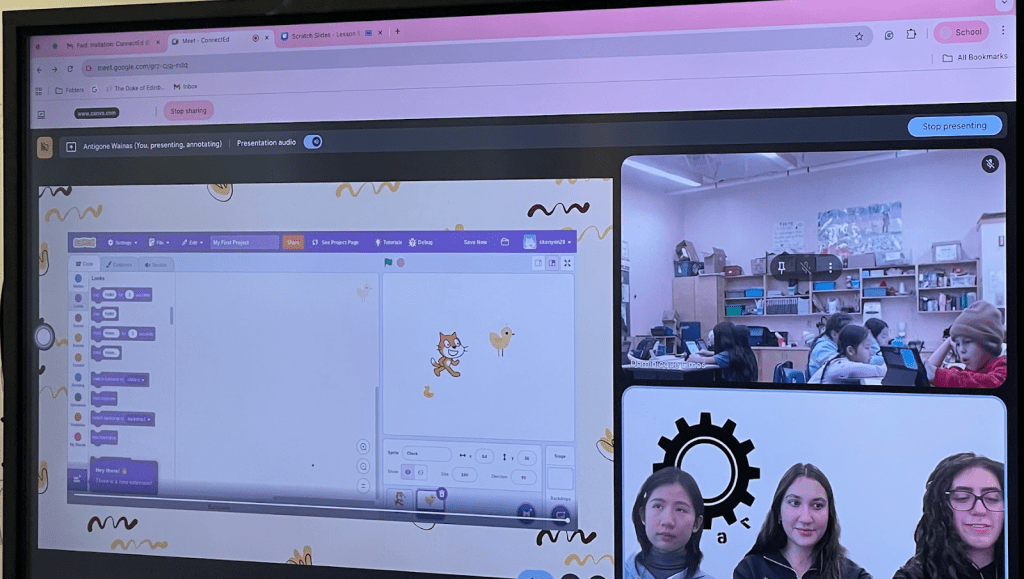
The computer science class built its own identity and created important learning opportunities. One of the examples was the ConnectED project. Our class partnered with a single school in the Northwest Territories to teach younger students how to code in Scratch. We prepared lessons, taught them step by step, and watched them build programs for the very first time. It was a clear example of how computer science can be used to share knowledge and widen access to STEM education. For us, teaching Scratch showed that programming skills can make a real difference for students who might not have had the chance to learn them.
Flex block also helped bring STEM awareness to the entire school, not just the students in the course. During these blocks, the robotics team organized activities for assemblies so every grade could participate. One of the most memorable events was when teachers tried driving the competition robot and attempted to score points. It turned a normal school day into something exciting and gave everyone a chance to see how the robot worked up close. Activities like this helped make technology feel approachable and fun. They also showed students why learning to code matters, because they could see the results in action rather than just hearing about it.
The presence of both robotics and computer science created a stronger environment for learning technology at HNMCS. Robotics demonstrated the possibilities, and computer science gave students the space to learn skills that would prepare them for university. Even though the programs were separate, they supported each other by showing students different sides of the same field.
As the school closes, these programs stand out as some of the most impactful parts of our experience. The computer science class provided real practice through projects like ConnectED, and robotics showed what applied programming looks like in action. Both helped students gain confidence in STEM and understand that they are capable of pursuing technical fields after graduation. The influence of these experiences continues with every student who took part in them.
Learning From Mangilaluk School
As part of the ConnectED partnership, the HNMCS Grade 5/6 classes also had the opportunity to learn directly from the Grade 3/4 students at Mangilaluk School. On Tuesday, November 4, they shared an in-depth look at life in Tuktoyaktuk, offering insights into their community, culture, and the land that shapes their everyday experiences.
One of the main topics they introduced was pingos. They explained what pingos are, how these ice-filled hills form, and why they are such an important feature of the Arctic landscape. For many HNMCS students, this was their first time learning about pingos, and it expanded their understanding of Canada’s northern geography.
They also spoke about the effects of climate change on the Northwest Territories. The students explained that the coastline in Tuktoyaktuk is being worn away by erosion, and that these changes are becoming more noticeable each year. They also mentioned how the weather in the NWT can be extremely cold, especially compared to Ontario, and how these conditions shape daily life in their community. Learning about these differences helped the Grade 5/6 classes understand that climate change and environmental conditions vary widely across Canada, offering them a broader perspective on how northern communities are affected.
Overall, this session gave HNMCS students meaningful insight into a northern Indigenous community and the environmental challenges they face. It broadened their understanding of Canada’s diverse regions and highlighted the value of learning directly from peers across the country.
 HNMCS Robotics Team 7659