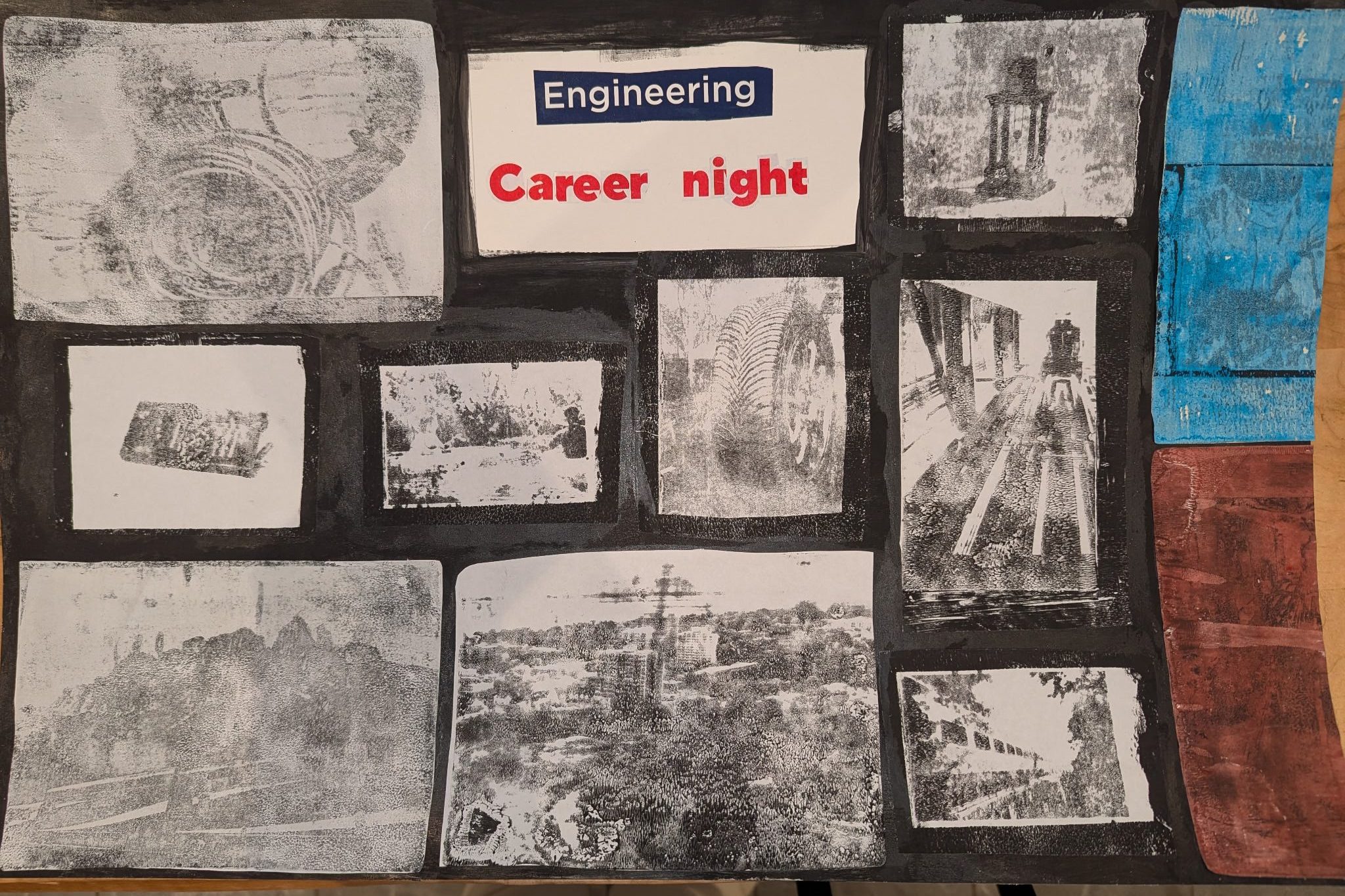
As Grade 12 students preparing to enter university, the past few months have been filled with research, applications, and endless discussions about “the future.” We all knew we wanted to pursue engineering, but the number of specializations felt overwhelming—civil, mechanical, software, electrical, biomedical, and so many more. That all changed after attending our school’s Engineering Career Night, where we heard from inspiring professionals whose journeys showed us that engineering is far more than equations and designs—it’s about creativity, adaptability, and making an impact.
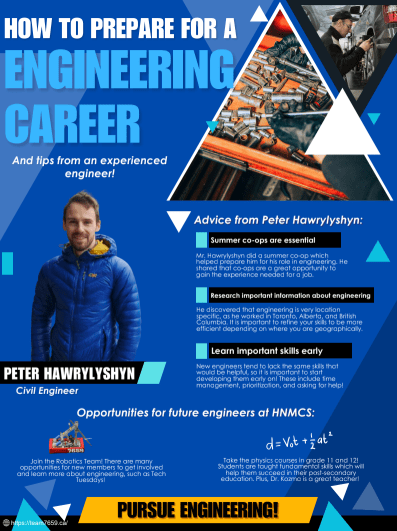
One of the speakers who stood out to us was Peter Hawrylyshyn, a Civil Engineer working in land development consulting. He described his work involving building permits, water main design, project management, and design development. What struck us most was how tangible his impact is—civil engineering literally shapes communities, creating systems that make cities function smoothly and sustainably. Hearing how his designs improve real lives made the field feel purposeful and rewarding.
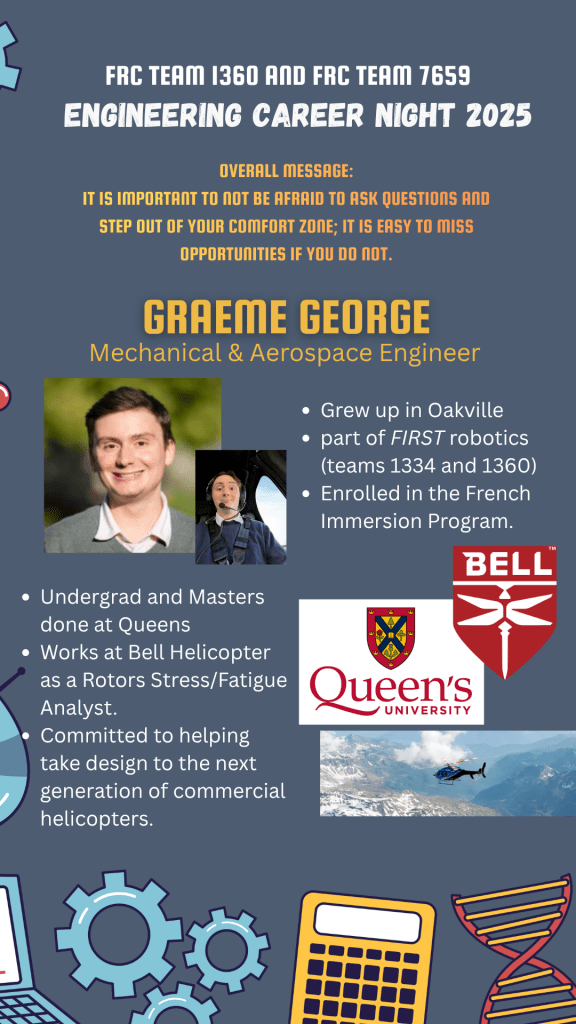
Later, Graeme George, a Mechanical Engineer from Queen’s University now working at Bell Helicopter, shared his journey from graduate research—where he applied machine learning to mechanical packaging problems—to designing for the aerospace industry. His message that mechanical engineering blends creativity, design, and innovation resonated deeply with us. We especially remembered his advice: “Have fun! You have your whole life to be stressed.” It reminded us that passion and curiosity should guide our choices, not fear of making the “perfect” one.
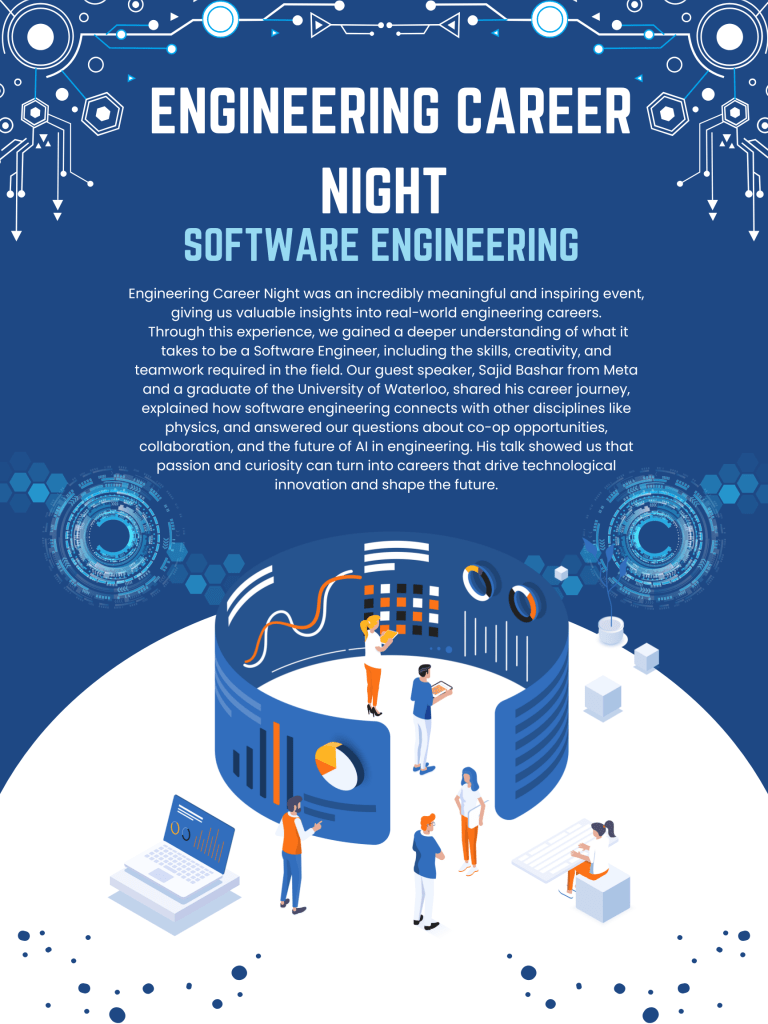
Sajid Bashar, a Software Engineer at Meta, opened our eyes to how coding goes beyond writing programs—it’s about empowering others. He explained how his work helps thousands of engineers by improving how they navigate and search massive codebases, showing us that small innovations in software can drive huge changes in productivity and creativity. Listening to him, we realized that the logic and problem-solving we practice in physics and math are the same skills that power software design. His work showed us that software engineering is not just about technology—it’s about clarity, efficiency, and collaboration.
 HNMCS Robotics Team 7659